
When an influencer recommends a product, I pay a mild amount of interest but I also automatically assume that they’re likely biased in some way. Perhaps the brand is paying them for glowing reviews, maybe they’re flirting with marketing teams to secure freebies and most importantly; they might be nothing like me. Their skin is glowing, yes, but their skin is not mine. They might be undertaking any manner of cosmetic treatments to achieve that dewy finish that has nothing to do with the bottle in their hand. It’s their business to look their best if they’re recommending products, in the same way as glossy magazines using models in a photoshoot.
Parting with hard-earned cash for a promise of better skin or hair is an act of trust. And some influencers are truly trusted by their fans. They’ve built this up gradually by allowing their followers to get to know them and it feels like a reciprocal relationship. But even the most down-to-earth influencers can be bought by big brand budgets and it’s only once you’ve tried, judged and panned the promoted product yourself that you realise you’ve been scammed.
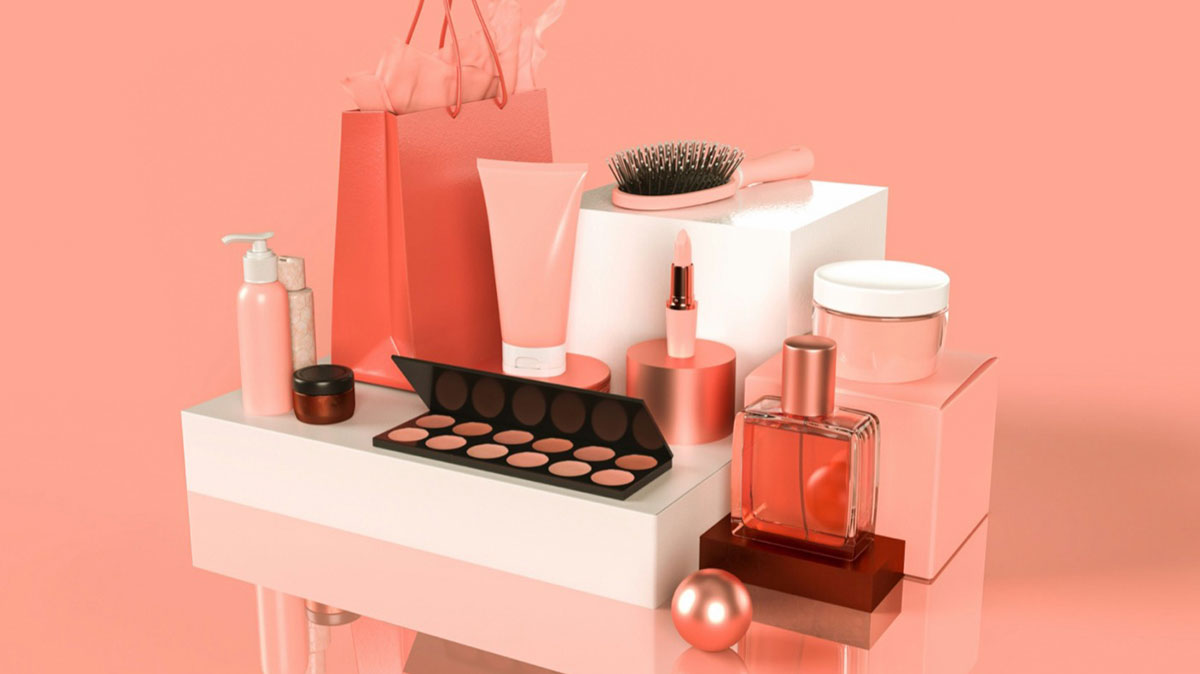
Enter AI. There’s a new, shiny influencer on the block and they’ve never even physically touched a cosmetic product or filmed a ‘get ready with me’.
By its very nature, ChatGPT (or your AI of choice) is ripe for knowing which products work and which don’t. It can tell you what’s popular but it can also compare the scientific breakdown of the formula at the same time. It scours reviews, it watches those hardworking influencers on TikTok and has ingested Reddit. That niche skincare niggle that’s been bothering you for years? If something has been published on the internet about it, Chat will know.
My exploration into AI-driven product recommendations started small. I wanted a new facial SPF because mine had been discontinued and everything I’d tried since was atrocious. I listed my particular concerns (oily & sensitive skin) and within seconds I had a personalised list of recommendations tailored to my budget. The brands were unsurprisingly trendy; they were things I’d seen influencers also mentioning. But here, in my AI chat, supplied with sources, prices and ingredients, they took on a new level of authority. These were recommendations backed by data.
Without data, you're just another person with an opinion.
W. Edwards Deming
People are hardwired to trust insights that have convincing data behind them. Rather than one person saying “I used this and I thought it was great”, you’ve suddenly got something that can give you information based on millions of opinions and cross reference those with your individual requirements. You’ve got something that can effortlessly intermingle professional write-ups (newspaper articles or reputed blogs) with real-life experiences mined from social media or Reddit forums.
The result is alluringly convincing. If you’re using Chat’s default conversational mode, it’s likely that your response is both flattering (“You’re so right to be concerned about this”, “You’re actually spot on with your thinking there”) and apparently neutral. There’s no paid partnership and there’s no visible loyalty to big conglomerates or retailers. Quite often, Chat’s responses would even attempt to rein me in: “I don’t think you need to invest money in that product right now, you just need to be consistent with the products you’re already using”. It’s the opposite to how it feels when you get a salesperson pounce on you in the real world. This influencer doesn’t solely live in the retail world; it also draws upon more functional information like health advice which tempers the selling with something resembling earnest care (take note Amazon – ‘Rufus’, Amazon’s AI shopping assistant simply shrugs its shoulders when asked about anything remotely relating to healthcare).
I bought the SPF and I’ve bought countless recommendations since. I most recently asked it for perfume layering recommendations and was sold a book off the back of it which has been thoroughly enjoyable (Perfumes: The Guide by Luca Turin and Tania Sanchez if you’re interested).
Were the recommendations good? Overwhelmingly yes. I’ve yet to be recommended a bad product but it’s also still early days. ChatGPT is only as good as its sources and you have to consider whether we’re about to enter an echo chamber of AI recommendations which get increasingly watered down to eventual slop. The same can be said for AI-generated art or creative writing. AI (for now at least) can only build upon what already exists. Few surprising or genuinely abstract ideas are made. But do I want abstract ideas when selecting products to put on my face? No, I want to know what’s been tried and tested with no faults found. I want safe, predictable results.
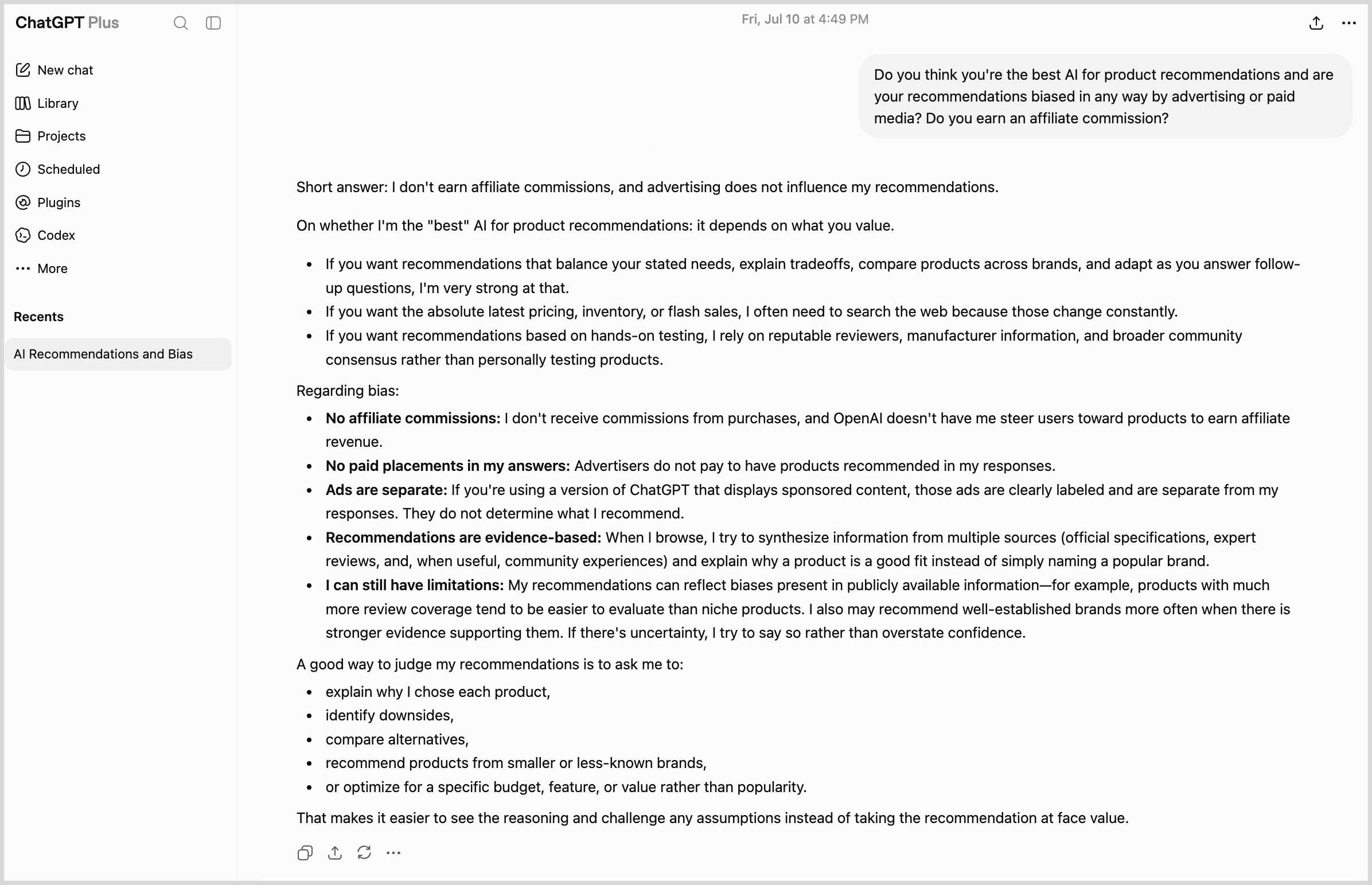
In a surreal turn of events, even Chat itself suggests you shouldn't take its recommendations at face value
The moment Google allows brands to purchase Chat bias, that initial innocence and credibility will be damaged. Same too for the tricksters who learn how to con the system. In the same way as ‘black hat’ early SEO tactics that overused keyword stuffing or cross-linking, once anyone learns how to slant Chat in their product’s favour, the quality will suffer (just look at the murky world of digital media buying to potentially glimpse into the future – source).
There were rumblings of a Shopify/ChatGPT partnership back in September last year, although their proposed ‘instant checkout’ approach never took off. Instead, buyers will ”discover Shopify merchants’ products in ChatGPT … and complete their purchase on the merchant’s own online store” but remain in the Chat (source). This already has the makings of channel bias if the Shopify Global Catalog is being prioritised in answers. It’s a huge win for Shopify if it comes to pass because it could convince many big brands to switch to the platform simply to improve their Chat visibility.
For us marketers, Chat has already severely disrupted the industry in so many ways. Google quietly started adding attribution tracking to the links provided in ChatGPT (peep source/medium = chatgpt.com/referral in GA4) and you have to wonder if that’s simply the start of a new wave of monetisation. Existing affiliate channels are being plundered for their content (Martin Lewis advice popping up when you ask about finances for instance) while simultaneously being elbowed out of the way for attribution airtime.
Existing affiliate channels are being plundered for their content … while simultaneously being elbowed out of the way for attribution airtime.
There is also a longevity question to be considered. Chat has gleaned all the useful information out of websites to present back in search results before you’ve even scrolled down to the results. How did Chat decide that its answer was the best one? From understanding user behaviour on the same very websites it crawled for content. How does that evolve over time? If everyone takes Chat’s first answer instead of interacting with anything in the actual search results, what will drive Chat’s future insight then? We potentially hurtle towards a technology that fuels its own degradation.
Finally, an ethical dilemma. Much has been written about the environmental concerns of AI. The data centres, the electricity and the cooling towers, burning through an inordinate amount of precious energy and resources. Consider that asking ChatGPT a question takes roughly 10 to 15 times more energy than a traditional Google search (source). As a species, we are very bad at turning down things that make our lives much easier or more pleasant just because there is an environmental consideration. You could absolutely argue that frivolous concerns like skincare or haircare are not important or worthwhile uses of this advanced technology. But you could also say the same for cosmetic procedures or shipping fast fashion halfway across the world from China.
Whether or not you buy into it, or agree with it, AI-driven product recommendations are having a moment, and brands will want to be ahead of the curve to ensure they don’t get left behind.
Speak to our digital team if any of this piques your interest – we’re always looking for new ways to make our websites more visible to these kinds of emerging technologies and can advise on both channel-specific and generalised attribution. Or just speak to Chat and it’ll give you a pleasing pat on the back and tell that you’re absolutely going in the right direction.